Sheen Priory
The King's CurseSheen Priory is a Carthusian monastery across the river from Syon Abbey, and in Margaret Pole’s family history it is both a refuge and a place of separation. It takes in her young son Reginald Pole, educates him under a severe discipline of silence, and later becomes a setting associated with dangerous prophecies about the Tudor dynasty. The monastery’s religious life offers Reginald shelter and formation, but its silence and its political associations make it a source of lasting anxiety for his mother.
Setting and Religious Life
Sheen Priory is the brother house of Syon Abbey, where Margaret and some of her children live. The two houses stand only a few miles apart, on opposite sides of the River Thames. From Syon, Margaret can see the priory’s chimneys; a hired boat can carry Reginald across the river on permitted visits. The distance is short enough to preserve a visual connection, but the river and the rules of the religious houses keep mother and son apart.
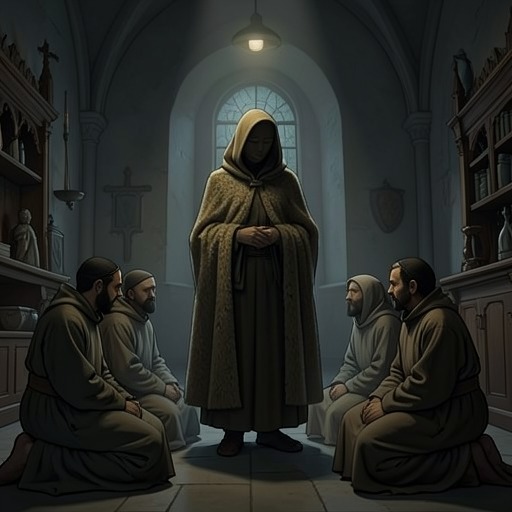
The priory belongs to the Carthusian Order, whose members live in individual cells devoted to prayer and work. Speech is severely restricted: the monks may speak on Sundays and feast days, and on a weekly walk they may talk quietly together. For the rest of the week, silence governs communal life. The priory’s high walls and towers give this discipline a physical setting, while its separated cells make solitude part of the order’s daily structure. Reginald is not simply sent to a school within a monastery; he is placed in a community whose way of life demands silence and withdrawal.
Reginald Pole’s Childhood at the Priory
Margaret accepts the arrangement because it provides for her son at a time when the family needs shelter and support. Bishop Fisher has found Reginald a place at Sheen Priory while arranging for Margaret and her younger children to stay at Syon Abbey. The plan appears generous: her son will be nearby, and she and the other children will have a roof over their heads within sight of him. Yet Margaret fears that the Carthusian discipline is unsuited to the lively child she knows, who enjoys reading aloud, singing, telling riddles, and playing with his brothers.
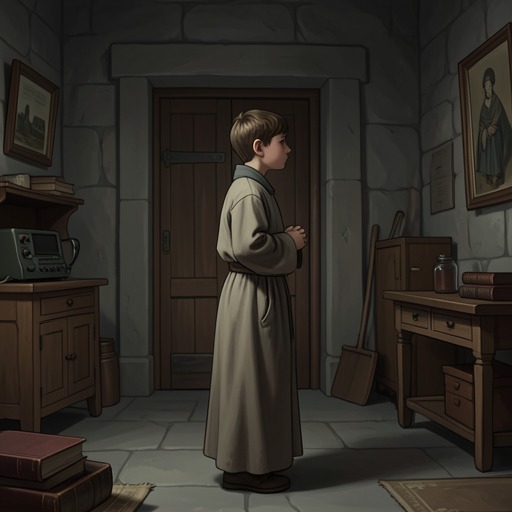
At the priory’s gate, the prior comes out to greet them and helps Reginald down from his horse. Margaret promises that she will visit and that her son will be allowed to visit her. Reginald does not resist or make a scene, but he looks small beside the prior and asks to go with his mother and siblings rather than be left there. The moment marks the difference between the promise of proximity and the reality of separation: the houses are near one another, but Reginald is entering a life governed by rules his mother cannot change.
By spring 1507, Margaret sees him only once every three months. He crosses the river in a hired rowing boat, stays for one night, and must return to the priory. The visits make the consequences of his upbringing visible to her. He has learned to keep his eyes down and his hands at his sides, and he is stiff when she embraces him. Margaret experiences this reserve as a profound change from the talkative, energetic boy she remembers. Her fear is not only that she sees him rarely; it is that the institution’s discipline is remaking the son she longs to have near her.
A Religious House Becomes Politically Dangerous
The priory’s religious connections later acquire a political meaning. When Margaret learns that a man has been accused of treason, the explanation includes his meetings with Carthusians and a prophecy said to be kept in the library at Sheen. According to the account given to her, the prophecy foretells that people will acclaim a duke as king and that Parliament will offer him the crown, as it had offered the crown to Henry VII. The allegations also concern predictions that the king would have no legitimate son and that the Tudor line would end.
Margaret initially sees nothing inherently suspicious in contact with the Carthusians. They are the order that received and educated her son, and she worships in their chapels. The political danger arises when religious discussion at Sheen is linked to claims about the succession and the future of the dynasty. The monastery’s reputation and the Pole family’s closeness to it become grounds for suspicion, even though Margaret distinguishes ordinary religious association from treasonous speech.
The connection grows more troubling when Margaret hears that the Duke of Buckingham had spoken with the Carthusians at Sheen and that his confessor disclosed predictions and manuscripts. Wolsey has persuaded the king that the duke foresaw the death of the Tudor line. Margaret insists that neither she nor her sons spoke treason, but the priory’s association with her family gives the accusation a reach beyond the duke himself. Later, Reginald reminds her that the duke was executed for listening to talk of the end of the Tudors in that very monastery. For Margaret, a place once chosen to protect and educate her son has become inseparable from the danger surrounding her kin.
Return and Changing Meaning
As an adult, Reginald chooses to go back to the Carthusian brothers at Sheen and live in silence again. He presents this as his own decision: unlike his childhood placement, it is not imposed because his family has nowhere else to send him. He expects to study, give the king his opinion without fear or favor, and visit his mother as he did before. Margaret acknowledges that circumstances have changed and that the family is now prosperous, but the place cannot be emotionally restored to what it once was. She remembers both her son’s forced childhood separation and the duke’s fatal association with the monastery.
Sheen Priory therefore carries two meanings that remain in tension. It is a religious community where Reginald is educated and later returns by choice, but it is also a site whose silence does not prevent dangerous political speech from being attributed to it. Across the river from Syon Abbey, the priory stays within Margaret’s sight while remaining beyond her control. Its closeness makes separation more painful; its religious discipline shapes Reginald’s life; and its association with prophecy turns the family’s connection to the Carthusians into a source of suspicion.